
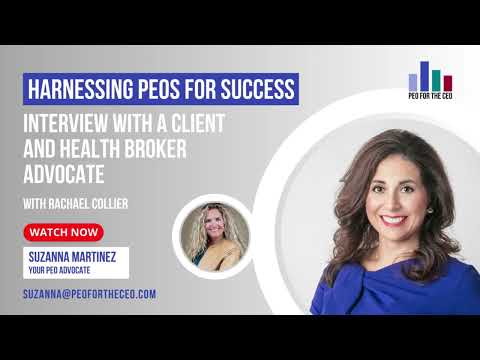
Rachel Collier is the CEO of Total Employee Benefits, a health insurance brokerage in Georgia. She sells benefits for a living. And her own firm has been in a PEO relationship for years — including a transition I helped her through from one large PEO to another. I wanted to know why someone who could shop the open market for her own team chooses to stay in the PEO model instead.
Privacy First, Then the Real Reason
Rachel's original reason for going with a PEO was almost incidental: when she left another agency with seven employees following her, she needed benefits in place fast, without signaling to the market what was happening. But the reason she *stayed* is the one that matters for most small employers — as a firm under ten employees, she couldn't spread risk the way a larger group can. ACA community rating and funding minimums work against small groups. A PEO's large-group master health plan gave her access to bigger-company pricing and a dedicated HR resource she couldn't otherwise justify.
What Changed When She Switched PEOs
Rachel moved her firm from Insperity to TriNet, and the implementation experience was, in her words, fabulous — "shout out to Tiffany at TriNet." But she was candid about the tradeoff that shows up after implementation ends: "The problem that a lot of employers tend to have is once that implementation baton is handed off to another team, that's where businesses wind up getting lost in the shuffle." TriNet's day-to-day model runs more on service tickets, with a 24–48 hour response window, versus the more personal relationship she'd built during onboarding. Neither is wrong — but it's the kind of difference that only shows up once you're living with it.
Why She Still Recommends PEOs to Her Own Clients
As a benefits advisor, Rachel has plenty of "creative solutions" in her toolkit — self-funding, reference-based pricing, level funding. But she still places some of her clients into PEOs, specifically newer companies (typically under 30 employees) that aren't ready to carve out their own payroll vendor, workers' comp, and benefits separately. "They want it all under one umbrella," she said.
When a PEO Isn't the Right Fit
Rachel has also *dismantled* a PEO relationship for a 200-employee client that needed benefit flexibility a large PEO couldn't accommodate — specific short- and long-term disability structures the PEO simply wasn't able to offer. The unwind took about six months and required careful planning, since the outgoing PEO controls the data and reporting. Her advice: give yourself ample time, and know that once you start the process, the PEO will know you're shopping.
The Bottom Line
Rachel's own numbers back this up: 96% of Americans don't know the four basic terms of their health plan until they have to use it, and by then it's too late to shop calmly. Whether the right answer is a PEO, a fully-insured plan, or something more customized depends entirely on your size, your growth stage, and what you actually need — not on what worked for the last company you talked to.
If you want a clear-eyed comparison of what a PEO could offer your business versus what you have now, our free PEO checklist is the place to start.
Suzanna Martinez, President | PEO For The CEO