Health Insurance Renewal Too High? Alternatives Employers Should Compare
By Suzanna Martinez · Nov 9, 2026
If you are staring at a high group health insurance renewal, you have more choices than paying it or raising everyone’s deductible. You can ask for the numbers to be re-checked, shop other carriers, look at a level-funded plan, join a larger group such as a PEO’s master health plan, or change how you fund part of the benefit. Each option has tradeoffs, and the right one depends on your size, your claims and how much time you have left.
Quick answer:
- Start 90 to 120 days before the renewal date if you can. Time is the cheapest tool you have.
- Ask what drove the increase before you decide how to respond.
- Compare plans on total cost and what employees actually get, not only the monthly premium.
- Expect tradeoffs. A lower price often comes with a narrower network, a higher deductible or more risk on your side.
Why a high group health insurance renewal happens
Most business owners tell me the same thing: “The increase is huge, and I can’t tell why.” Fair enough. Renewal letters are not written to be read over coffee.
How your renewal is built depends on your plan type. Fully insured small-group plans are generally rated on factors such as employee ages, location and plan choice, so the increase tends to follow overall medical cost trends. Larger groups and level-funded plans are more often priced from your own claims, which means a few expensive claims can move the number.
Either way, you can usually ask for a written explanation of what changed. That one request tells you whether you are fighting a market-wide trend or something specific to your group.
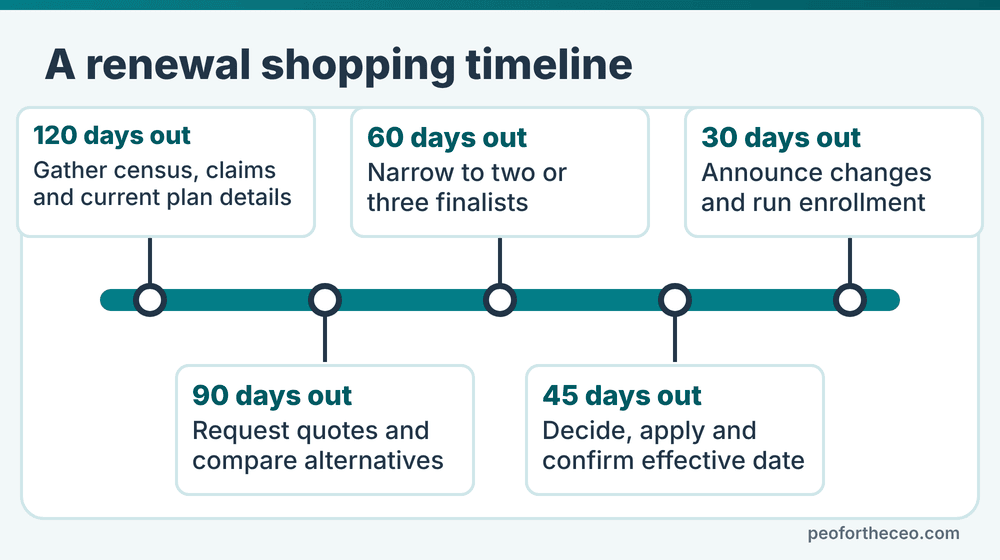 A general timeline. Your carrier and state may require different dates, so confirm yours.
Alternatives worth comparing
Think of a renewal like a car insurance quote you did not ask for. The first number you receive is where the conversation starts, not where it has to end. Here are the main paths, with an honest look at each.
| Option | Can help when | Watch out for |
|---|---|---|
| Re-quote with your current carrier | The increase looks out of line with your plan or census | The carrier may offer only small plan tweaks |
| Shop other carriers | Your current rates are high for your area | New networks, new deductibles, new paperwork |
| Level-funded plan | Your group is fairly healthy and you can accept some claims risk | Underwriting questions, and results depend on your claims |
| PEO master health plan | You want access to a larger group’s pricing and also want HR help | You are joining the PEO’s plan, so you also join its renewal cycle |
| Change plan design or contribution | You need a quick lever on cost | Employees feel it, so go in with eyes open |
I wrote more about the funding option in level-funded health plans as a middle ground. If you want a closer look at how the two worlds compare, see PEO health insurance vs. open-market coverage.
One real example: joining a master health plan
Sometimes the answer is not a cheaper version of the same plan. It is a bigger group.
A 24-employee tech company saved $102,000 by joining a master health plan. That is one client’s result, and I would never promise it for yours. Savings depend on your current carrier, your location, your census and the plan you pick.
The point is narrower: a company that size buying alone is one small pool. Joining a larger group can change the pricing conversation. It also changes who controls your renewal, which is why you should read the fine print on how a master plan renews.
What to ask before you switch anything
Whatever you compare, run it through the same short list of questions:
- What is the total annual cost, including employer contribution and what employees pay?
- Are our doctors and hospitals in network? Network strength varies by state and county.
- What are the deductible, out-of-pocket maximum and prescription tiers?
- How will this plan renew next year, and what usually drives that renewal?
- What happens if we have a large claim?
- Who do we call when an employee has a billing problem in month seven?
That last question matters more than people expect. A plan that looks cheaper on paper can cost you hours of HR time and a lot of employee goodwill if nobody picks up the phone.
If you are weighing cost-cutting ideas beyond switching plans, my post on how to lower employee health insurance costs without just raising deductibles walks through the other levers.
Mistakes that make a high renewal worse
A few patterns show up again and again when an owner is under deadline pressure.
- Waiting for the “final” renewal. Some employers hold off hoping the number will drop. It rarely does, and every week you wait narrows your options.
- Comparing premium only. A plan with a lower premium and a much higher deductible may simply move the cost to your employees.
- Skipping the network check. A cheaper plan that drops your team’s hospital or doctors is not cheaper for long.
- Making the choice alone. Ask your office manager or HR lead what employees complained about last year. They often know things the invoice does not show.
None of these is hard to avoid. They just need a calendar and a short checklist.
Where to start this week
You do not need to make a decision today. You need to get organized so you can make a good one.
- Pull your renewal letter and plan summary, and ask for the rate breakdown in writing.
- Gather your employee census: ages, zip codes, and who is enrolled in what.
- Ask for a claims summary if your plan type provides one.
- Decide what you will not compromise on, such as a hospital system or a prescription your team relies on.
- Pick a decision date and work backward from it.
Renewals feel urgent because the deadline is real. The good news is that employers who start early usually have more options than employers who start at 30 days.
I have helped plenty of owners sort through this, and the first conversation is always just a look at the numbers. No pressure, and if your current renewal is the best available, I will tell you that.
Warmly, Suzanna
If you would like a second set of eyes on your renewal, book a no-pressure conversation with me or email me at suzanna@peofortheceo.com.
Frequently asked questions
What can I do if my group health insurance renewal is too high?
You can ask your carrier or broker for the renewal breakdown, request quotes from other carriers, look at a level-funded plan, compare joining a PEO’s master health plan, or adjust how much you contribute. Start early, since open enrollment and applications take weeks. The right choice depends on your group size, claims and timeline.
How early should I start shopping when a renewal looks too high?
Many employers start 90 to 120 days before the renewal date, which leaves time to gather data, collect quotes and run enrollment. Notice requirements and application deadlines vary by carrier and state, so confirm your own dates. If you are already inside 60 days, you can still compare options, just with less room.
Will switching carriers lower my renewal?
It may, but it is not guaranteed. A new carrier prices your group using its own rates, networks and rules, so some switches save money and others do not. Compare total cost and the plan employees actually get, including deductibles, networks and prescription coverage, not only the monthly premium.
Is a high renewal always the carrier’s fault?
Not always. Renewals reflect general medical cost trends, your employees’ ages and location, and for some plan types your own claims. Ask for a written explanation of what moved the rate. Knowing the driver tells you whether switching carriers, changing plan design or changing the funding method is most likely to help.
This article is for education only. It is not insurance, tax or legal advice. Plan details vary by carrier, state and plan, so check the specifics for your business and talk with a licensed professional before you decide.