When Should You Start Shopping for Group Health Insurance Renewal?
By Suzanna Martinez · Nov 5, 2026
Start shopping about 120 days before your group health insurance renewal date. That gives you time to gather documents, see the renewal, compare options and decide without a panic. If your renewal is already 60 days away or less, you can still act, and I will cover exactly what to do first.
The group health insurance renewal timeline matters because options narrow as the date gets close. A decision made with three months to spare is a choice. A decision made with three weeks to spare is often a default.
The group health insurance renewal timeline, step by step
Here is the countdown I would use. It is a working schedule, not a legal one, because carriers and states set their own dates.
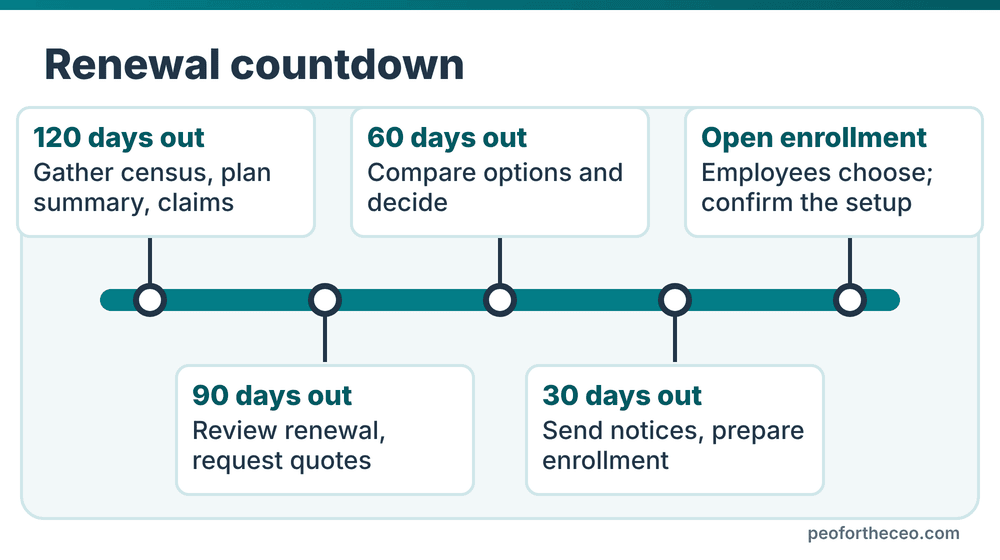 A working schedule, not a legal deadline list. Carriers and states set their own dates.
Think of it like a flight. Showing up two hours early means a calm coffee. Showing up ten minutes before takeoff means running through the terminal, and you may still miss the plane.
120 to 90 days out: get your house in order
This is the quiet stretch where the groundwork happens. Collect your employee census, current plan summary, last renewal, any claims reports your carrier will share, and your current contribution rules. I list everything in documents you need for group health insurance quotes.
Also decide what you want. Is the goal a lower cost, a better network, a different plan design, or less risk? Knowing that makes the next steps faster.
90 to 60 days out: see the renewal and request quotes
Fully insured renewals often arrive 60 to 90 days before the effective date, but this varies by carrier. Level-funded and self-funded renewals can follow a different schedule, since they involve fresh underwriting. Ask your carrier or broker for the date you should expect, instead of waiting for it to show up.
When the renewal lands, read the rate change, any plan changes, and the deadline for accepting it. Then request quotes from the market, so you are comparing real options. If the increase surprises you, what to do when your renewal is too high has the next steps.
60 to 30 days out: compare and decide
Compare more than the monthly premium. Look at the deductible, out-of-pocket maximum, network, prescription coverage, and how the renewal will be priced next year. Decide who is signing the paperwork, and confirm the carrier’s application and approval dates, since they can be earlier than you expect.
30 days out to open enrollment: notices and employees
Federal rules require certain notices to plan participants, and states add their own rules for notices, rate changes and cancellations. These differ by state and by plan type, so ask your carrier and broker which apply to you, and check with counsel for anything specific. Then plan open enrollment: dates, communication, and a plan for employees who have questions.
How the timeline shifts by plan type
Not every plan keeps the same clock.
- Fully insured plans. The carrier sends a renewal with new rates, often 60 to 90 days ahead. You can usually accept it, negotiate, or shop elsewhere.
- Level-funded and self-funded plans. These usually involve new underwriting each year, which can include updated claims and health information. Start earlier, and expect more paperwork. I explain the difference in level-funded vs. fully insured.
- PEO health plans. The PEO often controls the plan year and the renewal date. Ask your PEO when rates are set, when you will see them, and what notice you get before they change.
If you are not sure which of these you have, ask your broker or carrier first. It changes everything about the dates.
Mistakes that quietly cost employers options
- Waiting for the renewal letter to begin. By the time it arrives, you may already be inside the window where other carriers need applications.
- Treating the first number as final. Renewals can sometimes be questioned, and the carrier may have room to revisit the rate when you show it you are comparing.
- Gathering documents at the last minute. A missing census or plan summary can cost days you do not have.
- Forgetting the employees. A great plan with a bad enrollment still feels like a bad plan to your team.
- Comparing only the premium. A lower premium with a higher deductible or a thinner network is not the same plan at a lower price.
None of these is dramatic. Together, they are how a manageable renewal turns into an expensive one.
If your renewal is 60 days out or less
You can still do something useful. In order:
- Get the renewal in writing. Know the new rates, the plan changes, and the date you must accept or decline.
- Ask what your options are and when each closes. That includes renewing as-is, changing plans within your carrier, or moving to another carrier. Application deadlines are set by carriers, so ask for them.
- Send your documents today. A clean census and your current plan summary let a broker begin quoting. Missing items slow everything down.
- Ask about the fallback. If a move cannot be completed in time, what would renewing as-is for now look like, and can you shop for the next cycle sooner?
- Do not skip employee communication. Even a renewal at the same carrier needs clear notices and a clean enrollment.
Be honest with yourself, too. On a short clock, some alternatives, especially ones that need underwriting, may not be possible. A tight timeline narrows your options. It does not remove them.
Make it a habit
The best way to avoid the scramble is to put the renewal on a yearly calendar. Pick a date about 120 days before it, set a reminder, and treat it like any other planning cycle. Put the same documents in one folder every year, and the next countdown gets easier.
If you are inside the window right now, book a no-pressure conversation or email me at suzanna@peofortheceo.com, and tell me your renewal date. We will start from there.
Suzanna Martinez PEO for the CEO
Frequently asked questions
How early should I start shopping for group health insurance renewal?
About 120 days before your renewal date is a comfortable start. That gives you time to gather documents, see the renewal, request quotes and make a decision without rushing. If your renewal is closer, you can still shop, but your choices narrow, so contact your broker right away.
When do carriers send renewal notices?
Fully insured renewals often arrive 60 to 90 days before the effective date, but timing varies by carrier. Level-funded and self-funded renewals can work on different schedules because they involve fresh underwriting. Ask your carrier or broker for the date you should expect.
What if my renewal is less than 60 days away?
Do not panic. Get the renewal in writing, ask your carrier about your options and deadlines, collect your documents and ask a broker to quote right away. Some alternatives may not be possible on a short clock, so also ask what extending or renewing as-is would involve.
Do states require advance notice of rate changes?
Many do, but the rules differ by state and by plan type. Federal rules also require certain notices to plan participants. Ask your carrier and broker which notices apply to your plan, and check with counsel or your state insurance department for anything specific.
This article is for education only. It is not insurance, tax or legal advice. Plan details vary by carrier, state and plan, so check the specifics for your business and talk with a licensed professional before you decide.